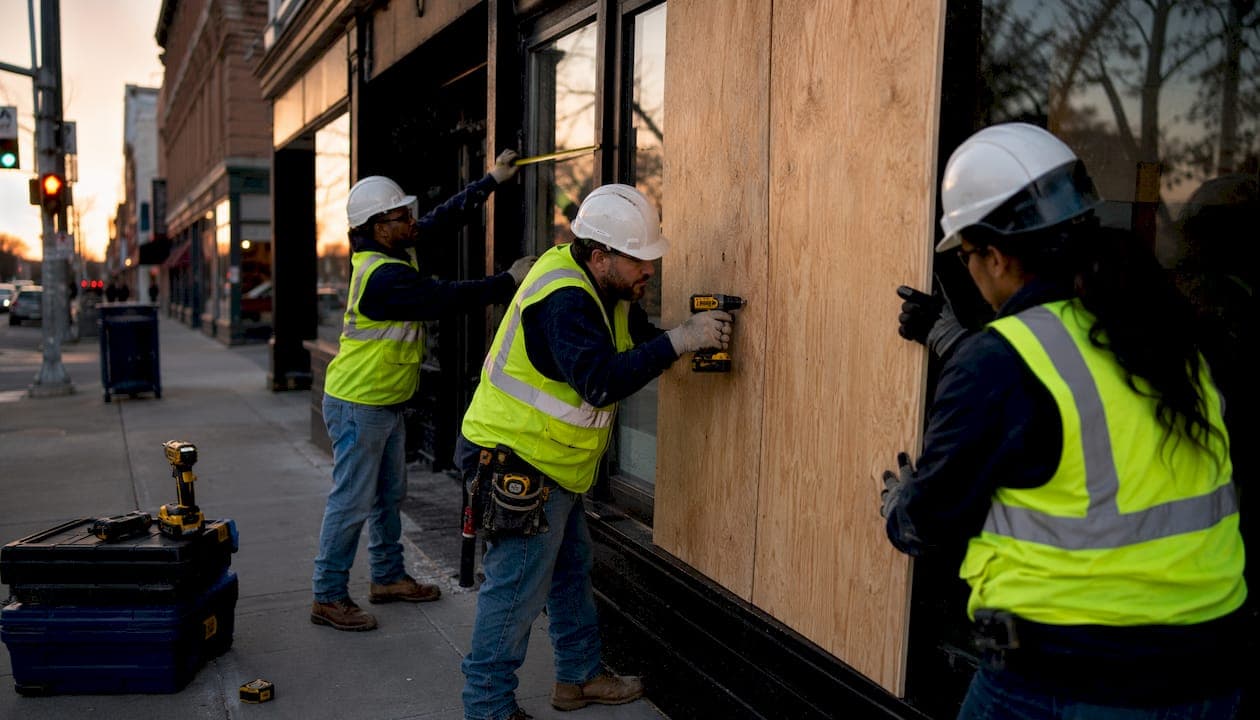
What is emergency board-up and why does it matter?
Emergency board-up is the rapid installation of temporary barriers over damaged windows, doors, and other openings to secure a building after a disaster, break-in, or severe weather event. The goal is straightforward: close off vulnerable entry points before weather, criminals, or liability exposure make a bad situation worse.
The scenarios that trigger this need are more common than most property managers expect:
- Break-ins and burglaries that leave shattered glass and forced door frames
- Storm damage from high winds, hail, or fallen branches
- Fire incidents that compromise windows, walls, or roof sections
- Vandalism targeting storefronts or commercial facilities
- Vehicle impacts that breach exterior walls or entry points
Speed matters here more than almost anything else. Delays increase repair costs and raise the risk of insurance claim denial. Most insurers treat board-up as a required mitigation step, meaning skipping it can cost you coverage. Plywood panels and polycarbonate security boards are the standard materials, installed with fasteners rated for wind and weather loads. The IICRC sets recognized standards for property damage mitigation that professional crews follow.
Table of Contents
- Why professional board-up beats doing it yourself
- What does the emergency board-up process actually look like?
- How do you choose a reliable emergency board-up provider?
- How Nationwidemaintenance handles emergency board-up for commercial clients
- Nationwidemaintenance is ready when your property needs it most
- Key Takeaways
Why professional board-up beats doing it yourself
The gap between a DIY fix and a professional installation is wider than it looks from the outside. A licensed crew evaluates broken glass and frame integrity before touching anything, then installs tamper-resistant boards that actually hold under pressure. A homeowner with a sheet of plywood and a few screws is not doing the same job.
Here is what professional service delivers that DIY cannot reliably match:
- Immediate stabilization of damaged openings to stop further structural deterioration
- Tamper-resistant installation that deters re-entry by the same intruders
- Weather resistance using professional-grade plywood and fasteners rated for heavy wind and rain
- Frame protection that reduces permanent repair costs by preventing additional stress on surrounding structures
- Insurance-compliant documentation with photos and written reports that expedite claim approval
- Legal compliance with local building codes that DIY work may not meet
Pro Tip: Always confirm your provider is licensed and insured before work begins. An unlicensed crew that damages a frame during installation creates a liability problem you now own.
Proper professional building maintenance after an incident follows a clear sequence, and board-up is step one in that chain. Getting it right the first time protects everything that comes after.
What does the emergency board-up process actually look like?
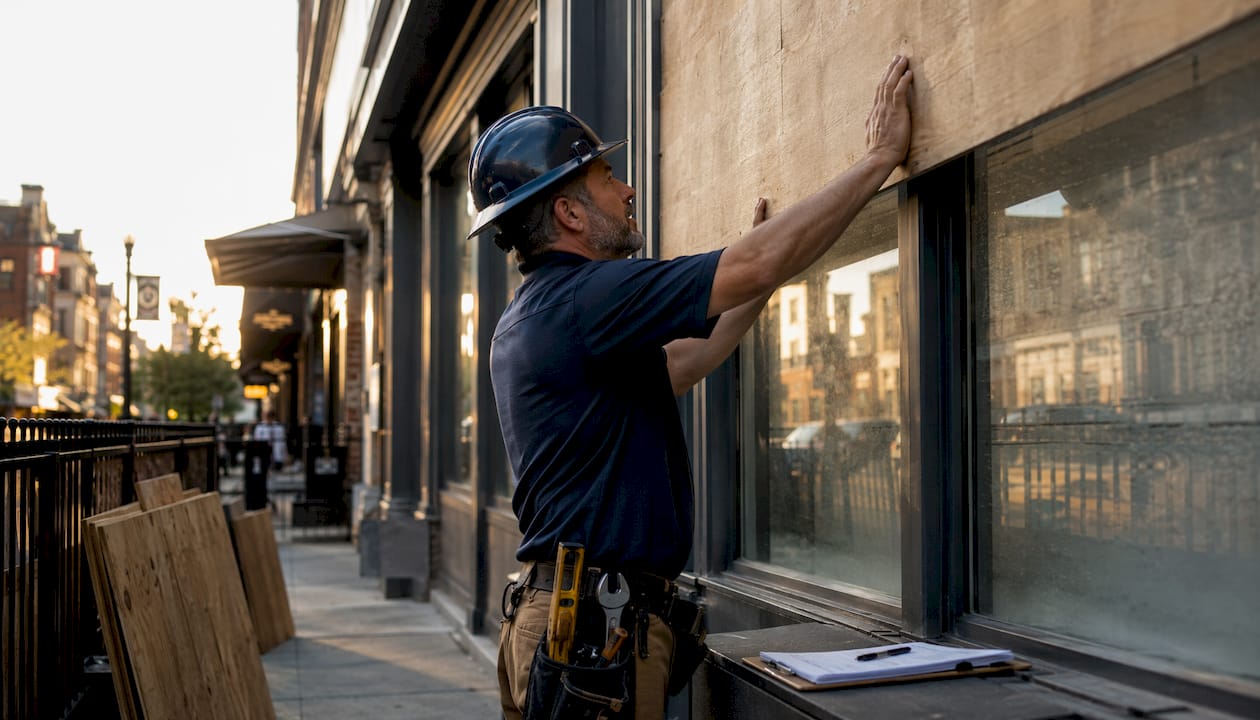
The process is faster and more methodical than most property managers expect. A professional crew arrives, assesses, cleans, installs, and documents, typically within a few hours of your call.
One critical safety point before any work begins: law enforcement should clear the scene before technicians enter. This protects both your staff and the responding crew, particularly after a break-in or fire.
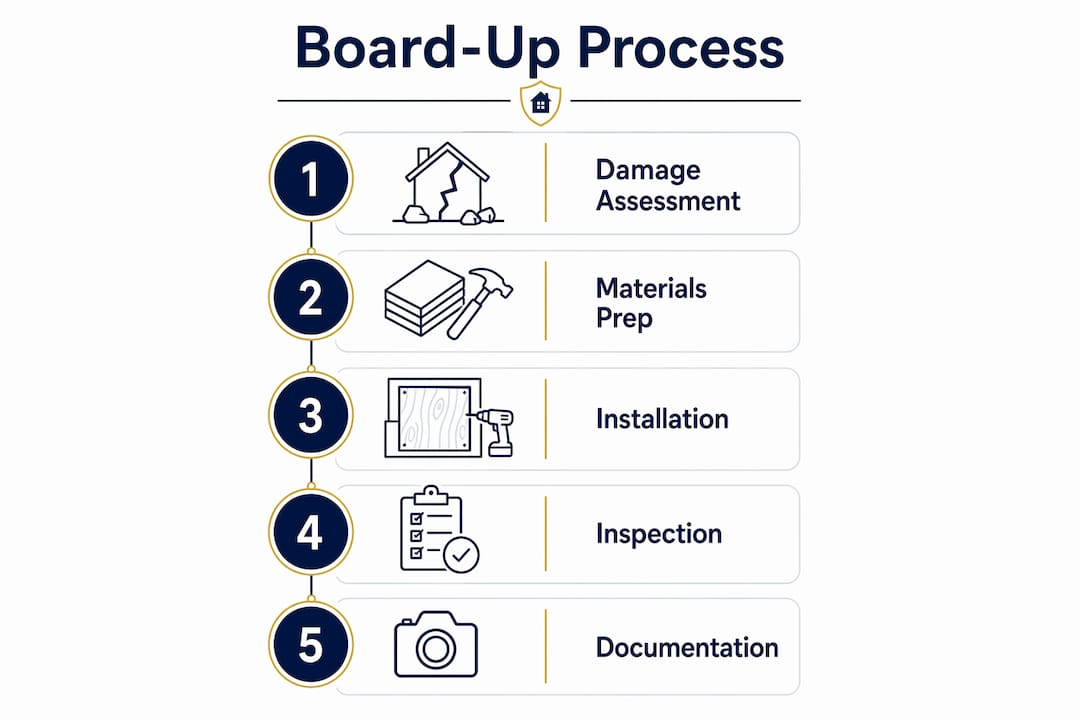
- Step 1: Damage assessment. Technicians inspect every compromised opening, check frame integrity, and identify hazards like loose glass or structural instability.
- Step 2: Cleanup and prep. Debris and broken glass are removed. Sharp edges and compromised frames get addressed before any board goes up.
- Step 3: Board installation. Weather-resistant plywood or polycarbonate panels are cut to fit and fastened securely. If specific access points need to stay functional, communicate that need to the technician before installation starts.
- Step 4: Documentation. Photos and detailed reports are taken before and after installation to support your insurance claim.
- Step 5: Next-steps review. The crew walks you through permanent repair options and timelines before leaving.
| Step | Activity | Typical Timeframe |
|---|---|---|
| Damage assessment | Inspect all openings, frames, and hazards | — |
| Cleanup and prep | Remove debris, glass, and sharp edges | — |
| Board installation | Fit and fasten panels over all openings | 30 minutes |
| Documentation | Photos and written report for insurance | — |
| Next-steps review | Permanent repair options and timeline | — |
Total on-site time for a standard commercial job typically runs two to three hours, though larger facilities or extensive damage will extend that window.
How do you choose a reliable emergency board-up provider?
Not every company that answers the phone at 2 AM delivers the same quality. These are the factors that separate a provider worth calling from one that creates more problems.
- Licensing and insurance. Non-negotiable. Verify both before anyone touches your property.
- 24/7 availability. Emergencies don't follow business hours, and a provider that closes at 5 PM is not an emergency provider.
- Professional-grade materials. Ask specifically about plywood thickness and fastener ratings. Thin panels and inadequate anchoring fail in the first windstorm.
- Insurance documentation. A good provider photographs damage before and after installation and provides written reports you can submit directly to your insurer.
- Integrated repair capability. A company that handles board-up and permanent repairs under one contract saves you the coordination headache of managing two separate vendors.
- Transparent pricing. Get a clear estimate before work begins. Vague pricing after the fact is a red flag.
For commercial properties and multi-location portfolios, ask whether the provider can handle door repair and hardware alongside window boarding. Facilities with multiple damaged entry points need a crew that can address everything in one visit, not a specialist who only handles glass.
Post-board-up care matters too. Temporary boards are not a permanent solution. Moisture can still infiltrate around imperfect seals, and the CDC notes that mold growth can begin within 24–48 hours of water exposure. Schedule permanent repairs as quickly as your insurance timeline allows, and inspect the boards weekly for movement or weather damage in the interim.
Local regulations also apply. Many municipalities require property owners to obtain a permit for boarding up a structure beyond a short window, typically 30 days. Check with your local building department to avoid code violations that could complicate your insurance claim or delay permanent repairs.

How Nationwidemaintenance handles emergency board-up for commercial clients
Nationwidemaintenance brings over 30 years of facility maintenance experience to emergency response work across New York, New Jersey, and Connecticut. The company is licensed, insured, and structured for 24/7 emergency facility response, which means a call at midnight gets the same crew quality as a call at noon.
What sets Nationwidemaintenance apart for commercial and retail clients is the integrated service model. Board-up does not happen in isolation. The same contract that covers emergency securing can extend to construction, cleaning, carpentry, and landscaping, so property managers are not juggling four vendors after a single incident. High-profile clients including Costco and CVS rely on this unified approach precisely because it eliminates the coordination gap between emergency response and full restoration.
The team documents all damage with photos and written reports before and after installation, providing the insurance-ready paperwork that speeds claim approval. For property managers overseeing multiple locations, that consistency across sites is worth more than a lower per-job rate from a provider who handles each incident differently.
Nationwidemaintenance is ready when your property needs it most
When a window shatters or a door gets forced at one of your locations, the next call you make determines how much worse the situation gets. Nationwidemaintenance provides licensed, insured emergency board-up for commercial, retail, industrial, and government properties across the Tri-State area, with 24/7 availability and the documentation your insurer requires. Unlike single-trade contractors, Nationwidemaintenance handles the full scope from emergency securing through permanent repair under one contract, so you are not starting over with a new vendor at every stage. Contact Nationwidemaintenance to get your property secured fast and keep your claim on track.
Key Takeaways
Professional emergency board-up requires licensed crews, weather-rated materials, and insurance documentation to protect your property and preserve your claim from the moment damage occurs.
| Point | Details |
|---|---|
| Act immediately | Delays raise repair costs and risk insurance claim denial. |
| Use licensed providers | Unlicensed work can void coverage and create new liability. |
| Documentation is required | Photos and written reports before and after installation support faster claim approval. |
| Plan for permanent repairs | Temporary boards are not indefinite; inspect weekly and schedule replacement quickly. |
| Nationwidemaintenance | Licensed, insured 24/7 emergency board-up for commercial properties across NY, NJ, and CT, with integrated repair services under one contract. |